An Artist Who Refuses to Stand Still
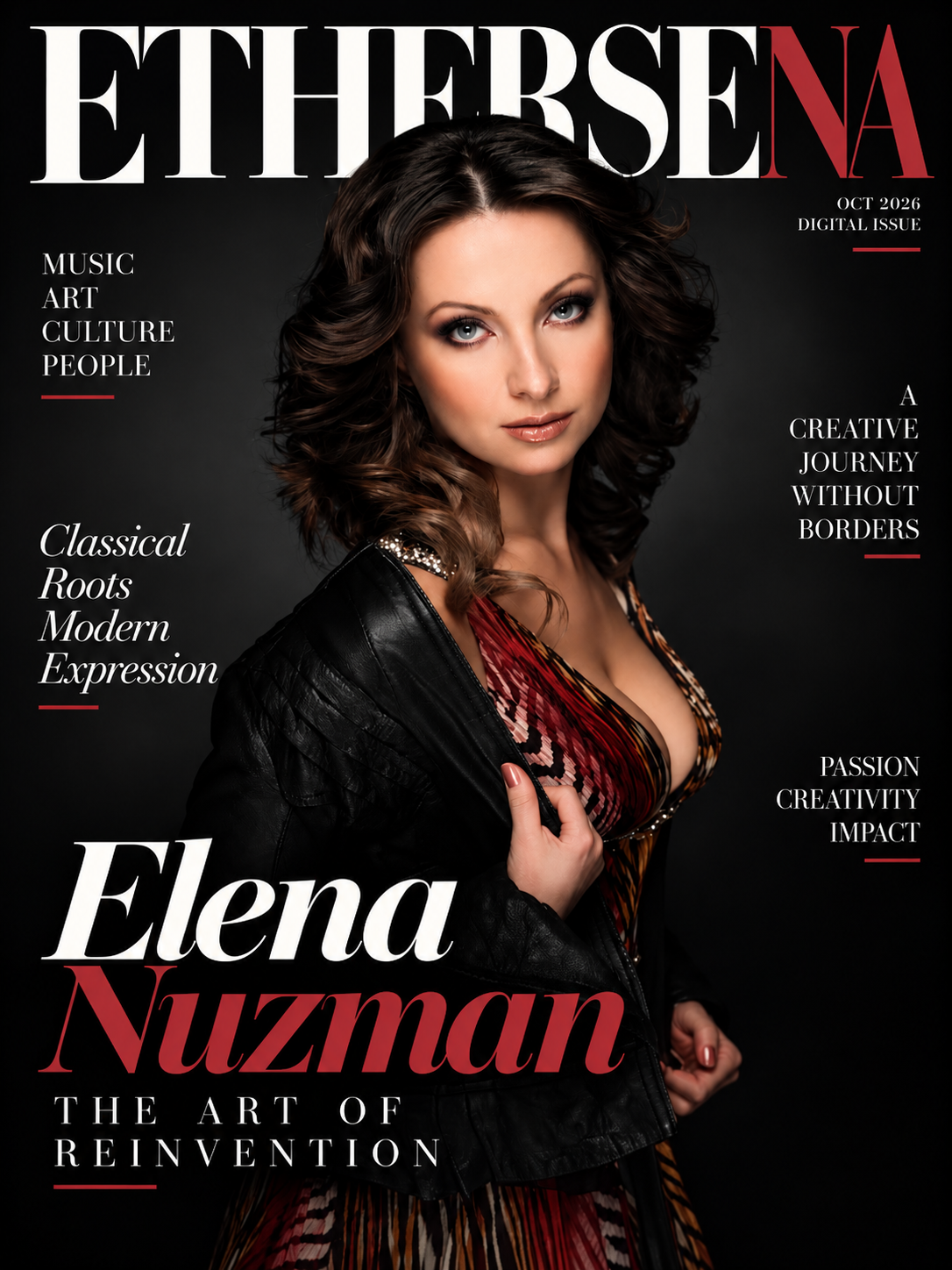
Some musical journeys are defined by a single instrument, a recognizable sound, or a particular genre. Others are shaped by the desire to explore what lies beyond familiar territory. Elena Nuzman belongs to the latter category. A classically trained concert pianist, vocalist, and composer, she has built her artistic identity around curiosity, versatility, and the belief that music becomes most powerful when technical excellence meets genuine emotion.
Her career brings together seemingly different musical worlds. Classical piano provides the foundation, rock introduces intensity, pop offers immediacy, and songwriting allows her to express ideas through her own compositions. Rather than choosing one direction, Nuzman has developed a creative language that allows these influences to interact.
For Ethersena, her story is a portrait of an artist shaped by dedication but never restricted by convention. It is a journey that begins with an extraordinary childhood connection to music and continues through international education, professional recognition, and an evolving understanding of artistic expression.
The Beginnings of an Extraordinary Talent
Born in Moldova into a family of professional musicians, Nuzman grew up in an environment where music was part of everyday life. Instruments and melodies surrounded her from an early age, providing a natural introduction to the discipline and creativity that would eventually define her career.
Her musical instincts became apparent when she was remarkably young. By the age of two, she was already reproducing melodies on the piano by ear. This early ability suggested an intuitive relationship with sound, one that would develop through years of study and practice.
At seven, she entered a prestigious music academy for gifted students. The experience marked the beginning of a more structured musical education, introducing her to the technical demands of classical performance.
Learning the piano at an advanced level requires patience, precision, and sustained concentration. Every composition presents its own challenges, from complex passages and rhythmic structures to the interpretation of subtle emotional details. Through her training, Nuzman developed the discipline necessary to approach these challenges with confidence.
Classical music became more than a professional foundation. It taught her to understand music as a language in which every note contributes to a larger story.
A World Beyond the Concert Hall

As her musical abilities matured, Nuzman’s education and experiences took her beyond Moldova. Her journey included time in Russia, France, the United States, Israel, and Canada, exposing her to different cultural environments and perspectives.
These international experiences broadened her understanding of music as a form of communication that transcends language. Although audiences may bring different experiences and expectations to a performance, the emotional qualities of a melody can create a shared connection.
Her academic path eventually led her to the Robert Schumann University of Music in Düsseldorf, Germany. There, she completed a master’s degree in concert piano, strengthening the technical and interpretive skills required for a professional career.
The experience reinforced the importance of balancing precision with individuality. A pianist must understand the composer’s intentions while also bringing a personal perspective to the interpretation. It is within this balance that a performance can move beyond technical correctness and become something memorable.
The knowledge she gained through classical training would later become an important advantage as she explored musical styles that demanded different forms of expression.
The Discovery of Another Instrument
For much of her early musical life, the piano was the centre of Nuzman’s artistic world. Yet her creative identity eventually expanded when she began exploring vocal performance.
A vocal competition became an unexpected turning point. Competing in the Rock-Pop category, she won first prize, discovering that her musical abilities could translate into a different form of performance.
Singing offered a new relationship with emotion and audience connection. The human voice can communicate vulnerability, confidence, longing, and strength in ways that differ from instrumental performance. For Nuzman, it became another means of expressing the musical ideas that had always interested her.
With a reported four-octave vocal range, she began developing a style that brought together the precision of her classical background and the expressive freedom of contemporary music.
Her debut album, I Believe In You, introduced audiences to this combination. Featuring emotional ballads and rock interpretations, the record demonstrated her ability to approach popular music with a perspective shaped by years of formal musical study.
The album entered the German Newcomer Charts and remained in the Top 10 for several weeks. Her interpretation of Whitesnake’s “Here I Go Again” also reached a broad audience, including those attending New Year’s Eve celebrations at Berlin’s Brandenburg Gate.
These experiences established a new dimension of her career, showing that her relationship with music could extend well beyond the piano.
The Courage to Reimagine Tradition
Nuzman’s interest in musical exploration became particularly evident with her second album, Liebestraum. Inspired by Romantic-era composers, the project explored how the emotional depth of classical music could be combined with contemporary pop arrangements.
The idea was not to replace traditional compositions or diminish their historical significance. Instead, it was to discover how their musical character could inspire a different creative experience.
Classical music often relies on carefully developed harmonies, intricate melodies, and expressive structures. Contemporary pop offers another set of possibilities, including direct storytelling, accessible arrangements, and an immediate connection with listeners.
By bringing these elements together, Nuzman developed a project that reflected her interest in creating relationships between musical traditions.
The album also represented a growing role for her as a composer. Writing many of the songs herself allowed her to move beyond interpretation and contribute original ideas to the music.
The title track surpassed four million views on YouTube and received the IMPALA Silver Award, marking an important milestone in her artistic development.
More importantly, the project demonstrated that tradition and innovation need not exist in opposition. The past can become a source of inspiration for new work when approached with imagination and respect.
The Personal Meaning of the Piano
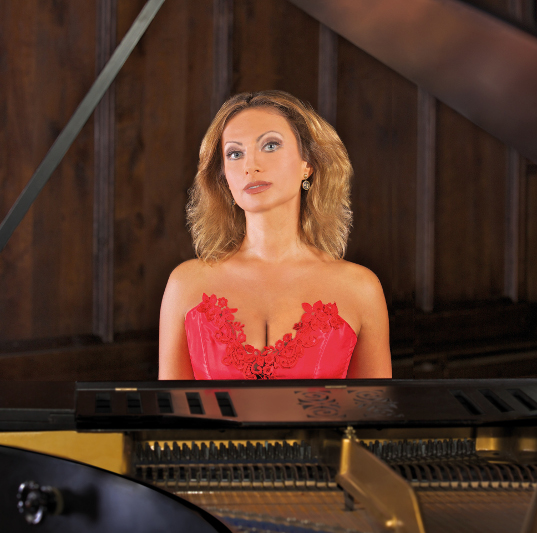
In 2025, Nuzman released My Piano And I, an album that returned attention to the instrument that first shaped her musical journey.
Bringing together celebrated songs, new compositions, and English versions of selected works, the record reflects an artist whose experiences have expanded considerably since childhood but whose connection to the piano remains strong.
The instrument represents continuity in a career defined by change. Through classical education, vocal exploration, and contemporary performance, the piano has remained a central part of her artistic identity.
Returning to it after years of experimentation also offers an opportunity for reflection. Musical interpretation develops with experience, and familiar pieces can acquire new meaning as an artist’s understanding deepens.
The piano is therefore not simply a reminder of where Nuzman began. It continues to offer possibilities for discovery, allowing her to approach music with both the knowledge of experience and the curiosity that first attracted her to it.
Discipline, Identity, and Creative Freedom
The public often sees the finished performance without witnessing the preparation behind it. Years of practice, technical refinement, and careful study form the foundation of musical confidence.
Nuzman’s classical background has provided the discipline necessary to navigate the demands of different musical styles. Yet her career also demonstrates that technical mastery becomes more meaningful when accompanied by curiosity and a willingness to experiment.
Moving between classical, rock, and pop requires more than the ability to perform different repertoires. Each genre has its own expectations, expressive qualities, and relationship with the audience. The challenge lies in adapting without losing the individuality that makes a performance distinctive.
For Nuzman, artistic freedom appears to come from understanding these differences rather than ignoring them. Her classical education provides structure, while her contemporary work creates space for spontaneity and personal interpretation.
This balance has allowed her to build a career that continues to evolve without abandoning its foundations.
A Journey Still Unfolding
Elena Nuzman’s story is ultimately one of continual discovery. From her early musical development in Moldova to advanced studies in Germany, from classical piano to vocal performance, and from interpreting established compositions to creating original work, her journey has been shaped by a willingness to explore.
Her achievements reflect dedication, but her broader artistic identity is defined by something equally important: the refusal to regard success as a reason to stop growing.
Music offers endless possibilities for interpretation, and every new project presents an opportunity to reconsider familiar ideas. For Nuzman, this process remains central to her creative life.
Her career reminds us that individuality does not require choosing one path and rejecting all others. Different influences can coexist, traditions can inspire innovation, and technical excellence can become the foundation for personal expression.
For Ethersena, Elena Nuzman represents the enduring value of artistic curiosity. Her story is not simply about mastering the piano or discovering a powerful voice. It is about the freedom to develop both, allowing each experience to contribute to a richer creative identity.
As her musical journey continues, one principle remains clear: the most meaningful artistry emerges when discipline creates the freedom to explore, and when every new direction remains connected to the passion that started it all.
Make the Ethersena angle more distinctiveReduce repeated artistic reflections